
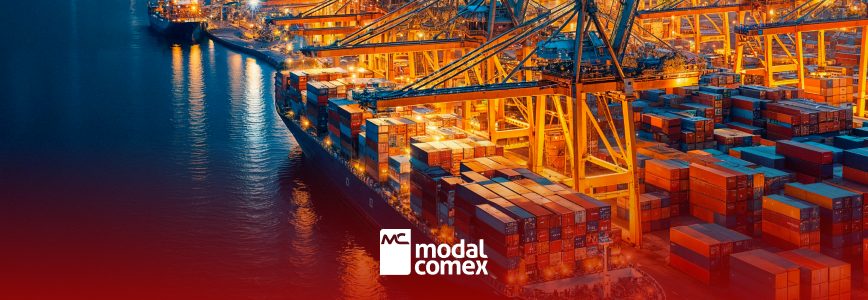
Brazil’s trade balance results for the first quarter of 2026 highlight a factor that often goes unnoticed outside the logistics sector: the strategic importance of port infrastructure to the country’s competitiveness in international trade.
Between January and March, Brazil exported US$82.3 billion, representing a 7.1% increase compared to the same period last year. The trade surplus reached US$14.1 billion, a significant 47.6% increase, driven mainly by higher exports to key markets such as China and the European Union.
Behind these figures lies a logistics network that supports the majority of the country’s foreign trade operations. Today, more than 95% of Brazil’s exports and imports move through its ports, which handle the flow of agricultural commodities, minerals, oil, and manufactured goods destined for major global markets.
This strong export performance comes at a time of growing port activity. In January alone, Brazilian ports handled 104 million tons of cargo, a 12.8% increase compared to the same month in 2025. The result reflects the sector’s ability to keep pace with rising international demand while ensuring greater operational efficiency across supply chains.
In addition to higher cargo volumes, investments made in recent years have helped expand the country’s logistics capacity. The modernization of terminals, improvements in land and waterway access, and the development of new infrastructure projects are helping reduce long-standing bottlenecks, increase productivity, and strengthen Brazil’s position as a strategic supplier of commodities and manufactured products.
For companies engaged in international trade, this scenario reinforces an increasingly clear reality: global competitiveness depends not only on the quality of exported products but also on logistics efficiency. Lower costs, greater operational predictability, and increased cargo-handling capacity have become critical factors for taking advantage of opportunities in increasingly demanding international markets.
As global trade continues to expand and new trade agreements open access to strategic markets, Brazil’s port infrastructure is expected to play an even greater role in supporting economic growth. More than just gateways for imports and exports, ports are becoming essential assets for economic development, foreign exchange generation, and the strengthening of Brazil’s presence in global trade.