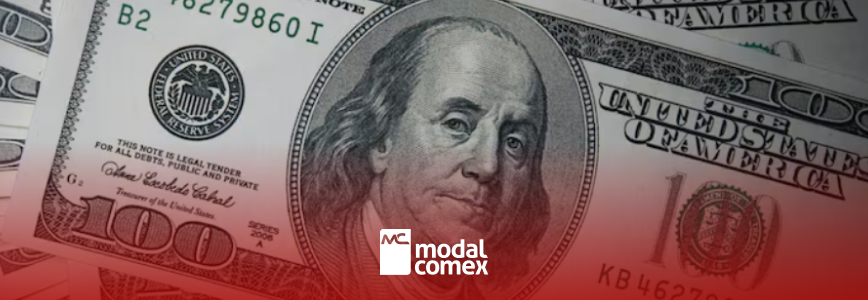
The recent decline of the dollar, reaching its lowest level in the past two years, has drawn the attention of companies and foreign trade professionals. This movement is the result of a combination of factors, such as the inflow of foreign capital into Brazil, strong commodity export performance, and the interest rate differential between the country and economies like the United States. In practice, the greater the inflow of dollars into the country, whether through exports or investments, the stronger the Brazilian real tends to become against the US currency.
But what does this mean in practice for foreign trade?
On the import side, the impact is positive. A weaker dollar reduces the cost of acquiring products, inputs, and technologies from abroad. This benefits companies that rely on imported raw materials and can even encourage investment in production modernization. In many cases, this scenario also helps contain inflation, as imported goods become cheaper.
For exports, on the other hand, the scenario is more challenging. With a stronger real, Brazilian products become relatively more expensive in the international market, reducing competitiveness, especially in price-sensitive sectors such as commodities and manufacturing. This can lead to lower export volumes and may even impact the trade balance surplus.
As a result, the decline of the dollar creates a dual effect on foreign trade: while importers gain momentum, exporters need to strengthen their strategic approach.
From a macroeconomic perspective, the impacts are also significant. A stronger exchange rate can stimulate consumption and reduce production costs in the short term, but it also requires the country to improve its structural competitiveness, reducing reliance on exchange rate advantages to compete globally.
It is important to note that this exchange rate movement is not necessarily permanent. The dollar is highly sensitive to factors such as the political environment, fiscal risks, and changes in the global economy, which can lead to volatility over time.
The decline of the dollar is not inherently good or bad. It simply redistributes opportunities and challenges within foreign trade. More than just monitoring exchange rates, companies operating in international trade need to be prepared for a dynamic environment. Strategies such as market diversification and operational efficiency are no longer differentiators, but essential elements for success.