In foreign trade, every detail of the cargo makes a difference, and one of the most decisive, though little discussed, aspects is knowing whether it is stackable or not. This characteristic directly influences both the cost of freight and the way the goods will be handled and transported, whether by air or sea.
Stackable cargo refers to goods that can be placed on top of each other without risk of damage, such as properly designed boxes and well-structured pallets. Non-stackable cargo, on the other hand, requires extra care: it may be fragile, have an irregular shape, concentrated weight, or simply not withstand pressure, such as machinery, glass, chemicals, or delicate equipment.
When quoting transportation, stackability makes all the difference. Carriers and shipping lines work with two main criteria: weight and volume. However, when cargo cannot be stacked, it occupies “exclusive” space inside a container or aircraft, significantly reducing the available transport capacity.
This means that non-stackable cargo tends to be more expensive, as it prevents full use of available space. Stackable cargo, in contrast, allows for better optimization, which can result in more competitive freight rates.
Additionally, non-stackable cargo may require special packaging, structural reinforcements, additional securing, or even specific handling equipment, all of which can also affect the final transportation cost.
Maritime Transport
In maritime transport, stacking is essential for organizing containers on board. Ships are designed to carry thousands of containers stacked vertically, following strict standards of weight distribution and stability.
When cargo is non-stackable, it must be placed in specific locations, often at the top of the stack or in separate areas, which requires additional planning by the logistics operator. In some cases, it may even be necessary to use special containers such as flat racks (suitable for heavy cargo) or open tops (with a removable tarpaulin roof).
This also impacts port operation time, as non-stackable cargo requires more care during loading and unloading, increasing handling time and, consequently, associated costs.
Air Transport
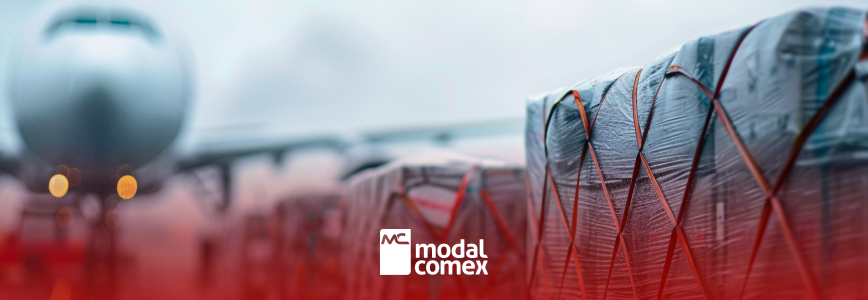
In air transport, stackability is even more critical. Aircraft have limited space and weight capacity, and any cargo that cannot be stacked drastically reduces the efficiency of the aircraft’s cargo hold.
Moreover, non-stackable cargo often requires special attention, such as containment nets or reinforced pallets to ensure safety during the flight. This can consequently lead to higher freight costs.
On the other hand, stackable cargo allows for faster and more efficient loading, facilitating consolidation with other shipments and contributing to a more economical operation.
Understanding whether cargo is stackable or not goes far beyond a simple logistical classification. It is a strategic factor for importers and exporters. This information helps anticipate costs, avoid operational surprises, and choose the best transport solution.
The clearer and better planned the nature of the cargo, the more efficient the entire logistics chain will be, and Modal Comex is ready to support you at every stage of this process.