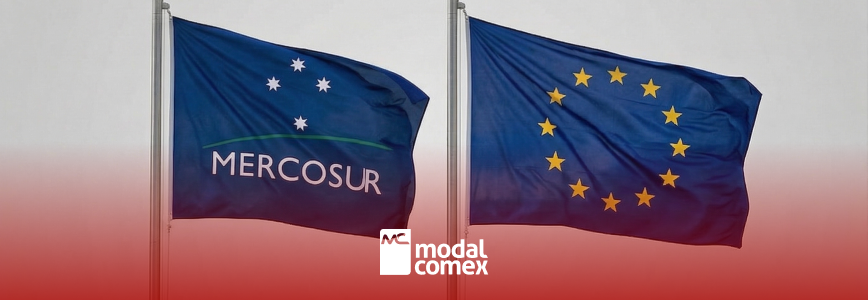
After more than 20 years of negotiations, the National Congress has enacted the agreement between Mercosur and the European Union, marking an important step toward bringing the deal into effect. This is one of the most significant developments in international trade in recent years and is expected to directly impact companies involved in import and export activities.
The agreement connects two major markets, bringing together more than 700 million consumers and around a quarter of the world’s GDP. This opens the door for Brazilian products to gain more space in Europe, while also increasing competition in the domestic market with the gradual entry of European goods.
One of the key points of the agreement is tariff reduction. It is expected that up to 95% of Mercosur exports to the European Union will have tariffs reduced or eliminated over time. In return, Mercosur countries are also expected to ease the entry of European products, in a gradual manner and with different timelines depending on the sector.
Beyond cost reduction, the agreement also introduces important changes in rules of origin, regulatory requirements, and trade standards. This means companies need to be prepared not only to seize new opportunities, but also to adapt to a more competitive and demanding environment.
The agreement’s entry into force still depends on the final steps among the countries involved, but the expectation is that its first effects will begin to be felt from 2026 onward, with gradual implementation in the following years.
For companies operating in foreign trade, this is a strategic moment. Understanding the agreement, reviewing operations, and anticipating changes can be key to gaining market share and increasing competitiveness. Count on Modal Comex to support your company and turn this scenario into opportunity.