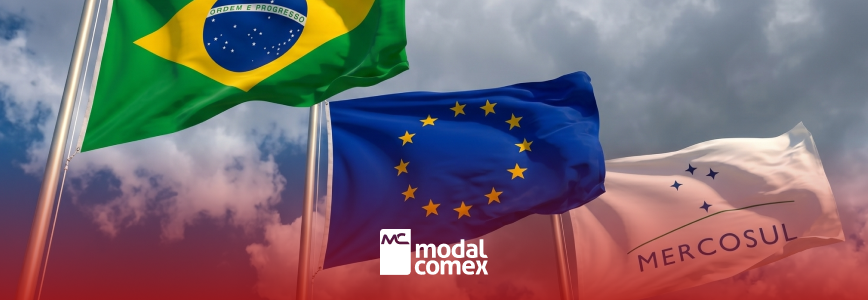
After more than 20 years of negotiations, Brazil has taken a decisive step toward implementing the trade agreement between Mercosur and the European Union. With the signing of the decree that incorporates the treaty into Brazilian law, the final stage required to enable its entry into force has been completed. This allowed the agreement to begin provisional application on May 1, 2026. This is an important milestone that changes the level of trade relations between the two blocs.
Together, Mercosur and the European Union represent a market of around 720 million people and a GDP exceeding US$22 trillion. In other words, this is one of the largest free trade areas in the world.
In addition to the formal approval, the Brazilian government has also advanced operational measures, including important definitions regarding tariff quotas, rules of origin, and integration with the Siscomex Single Portal. These points are essential for companies to effectively benefit from the agreement in their daily operations.
One of the main impacts will be the gradual reduction of tariffs. The European Union is expected to eliminate tariffs on most Mercosur products within shorter timeframes, while Mercosur countries will implement their tariff reductions more gradually, with some sectors taking up to 15 years.
Several products will already benefit from tariff reductions or eliminations at the early stages of the agreement, increasing the competitiveness of Brazilian exports, especially in sectors such as agribusiness, industry, and food products.
For companies operating in foreign trade, this new scenario requires attention. Understanding rules of origin, technical requirements, and European standards will be essential to fully take advantage of the opportunities created by the agreement.
Although the provisional application is already underway, the agreement still needs to be fully ratified by all European Union member states before entering into full force. Even so, the movement already points to a clear direction: Brazil is gaining more space in global trade, with new market opportunities and greater competitiveness for companies.