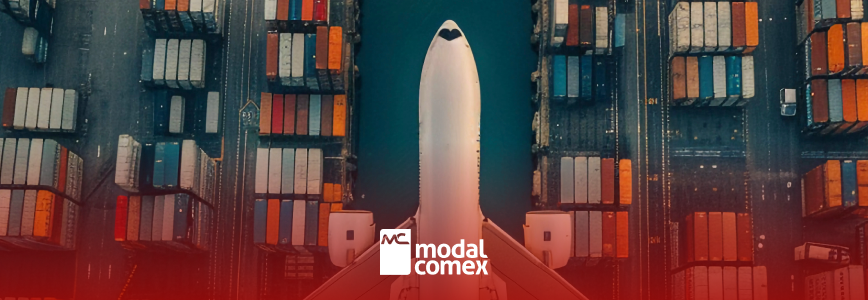
The escalation of tensions in the Middle East has already begun to cause significant effects on international logistics chains. In addition to the geopolitical implications, maritime and air transport companies have started adopting emergency measures to reduce operational risks and preserve the continuity of operations.
In air transport, the impact has been immediate. Strategic airports in the region, such as Dubai and Doha, have faced interruptions and operational restrictions following the intensification of the conflict involving countries in the region and their allies. As a result, several flights have been canceled and some air corridors have had to be temporarily closed, causing delays and rescheduling on routes connecting Europe, Asia, Africa, and the Americas.
These hubs play a central role in global connectivity. When operations at airports of this scale are affected, the impact quickly spreads throughout the international air network, affecting not only passenger transport but also the flow of air cargo that depends on these connections.
In maritime transport, the situation is also beginning to generate operational adjustments. Some carriers and logistics operators have already announced preventive changes to their operations, including redirecting vessels to alternative ports and reviewing commercial routes. In certain cases, there has also been a temporary suspension of bookings to assess logistical and operational risks in the most sensitive areas.
Beyond operational changes, geopolitical instability also tends to put pressure on logistics costs. Situations of international tension often directly impact maritime insurance premiums, increase fuel consumption due to potential route deviations, and reduce operational predictability. As a result, some companies are already signaling the possibility of emergency adjustments to freight rates.
Although it is still too early to measure all the medium and long-term effects, the situation reinforces how closely global logistics is connected to geopolitical developments. Strategic regions for international transport, when affected by conflicts or instability, can trigger significant impacts on supply chains in different parts of the world.
For importers and exporters, the current moment requires constant monitoring of communications from carriers, airlines, and logistics operators. Route changes, cost revisions, and possible delays may become more frequent in the coming weeks, requiring planning and greater flexibility in foreign trade operations. Modal Comex continues to monitor market developments and remains available to support your company in decision-making and in adapting to possible changes in logistics routes and costs.